Agriculture
In agriculture, Level 4 (L4) traceability provides batch and lot-level transparency across the farm-to-fork supply chain. L4 enables growers, processors, distributors, and retailers to track produce and agricultural batches from harvest to distribution, ensuring food safety, quality control, regulatory compliance, and real-time visibility for all stakeholders.
Agriculture
What L4 Traceability Means in Agri
This approach strengthens brand trust and traceability credibility with consumers and regulators alike
Level 4 traceability involves:
Structured batch/lot identification for harvests and produce
Standardised data capture at key points (sorting, packing, shipping)
Visibility across partners — from growers to retailers
End-to-end reporting for product provenance and safety
Supports compliance with food safety and supply chain regulations
Why L4 Traceability is Essential in Agriculture
Food Safety & Compliance
Supports international food safety standards and allows rapid containment of quality issues.
End-to-End Visibility
Documents every critical event across supply chain stages, reducing risk and disruption.
Efficient Recall & Quality Control
If contamination or spoilage is detected, affected lots are quickly identified and removed.
Better Collaboration
Growers, processors, distributors, and retailers share a standardised data view for improved coordination.
Scalability & Integration
L4 traceability solutions integrate with existing enterprise systems (ERP, WMS, IoT platforms) and can scale as operations expand — a core advantage noted in industrial traceability solutions.
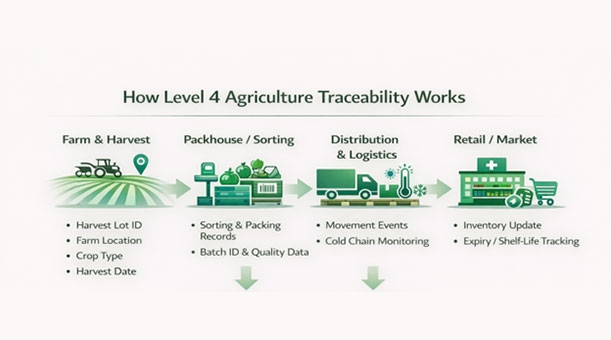
How L4 Agriculture Traceability Works
What Does L4 Traceability Mean for Tax-Regulated Products?
Level 4 traceability enables end-to-end tracking and tracing of products that are subject to excise taxes and regulatory control, including tobacco, alcoholic beverages, and high-value goods like jewelry. It ensures that every batch or lot of products can be monitored throughout the supply chain — from manufacturing to final retail sale.
These systems integrate digital tax stamps or unique identifiers into traceability infrastructure, aligning with international guidance on traceability and tax compliance.
This capability helps governments, manufacturers, and distributors:
Verify authenticity and compliance with tax laws
Prevent counterfeiting and illicit trade
Capture movement and tax payment events
Provide visibility of tax stamp/identifier application and scans
Enable rapid action in cases of tax evasion or fraud